
Dear Reader,
My name is Hannah Lee. I’m a Television Producer here at NorCal Public Media, and a storyteller of all things environment and climate. In this monthly newsletter, I share stories that give us new ways to think and care about the natural world.
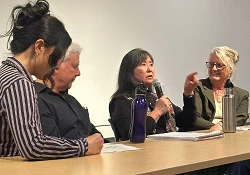
But, to be honest, I’ve been really struggling to write this month’s edition. Work and life have both been moving at breakneck speed these days – especially with our Center for Environmental Reporting. In the next month alone, we’re organizing three screening events for the new PBS docuseries Henry David Thoreau, filming a panel discussion about youth climate activism, shooting our three-night live television fundraising auction, and travelling to Austin to present on Climate California at the PBS Annual Meeting. Busy times!
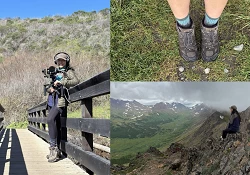
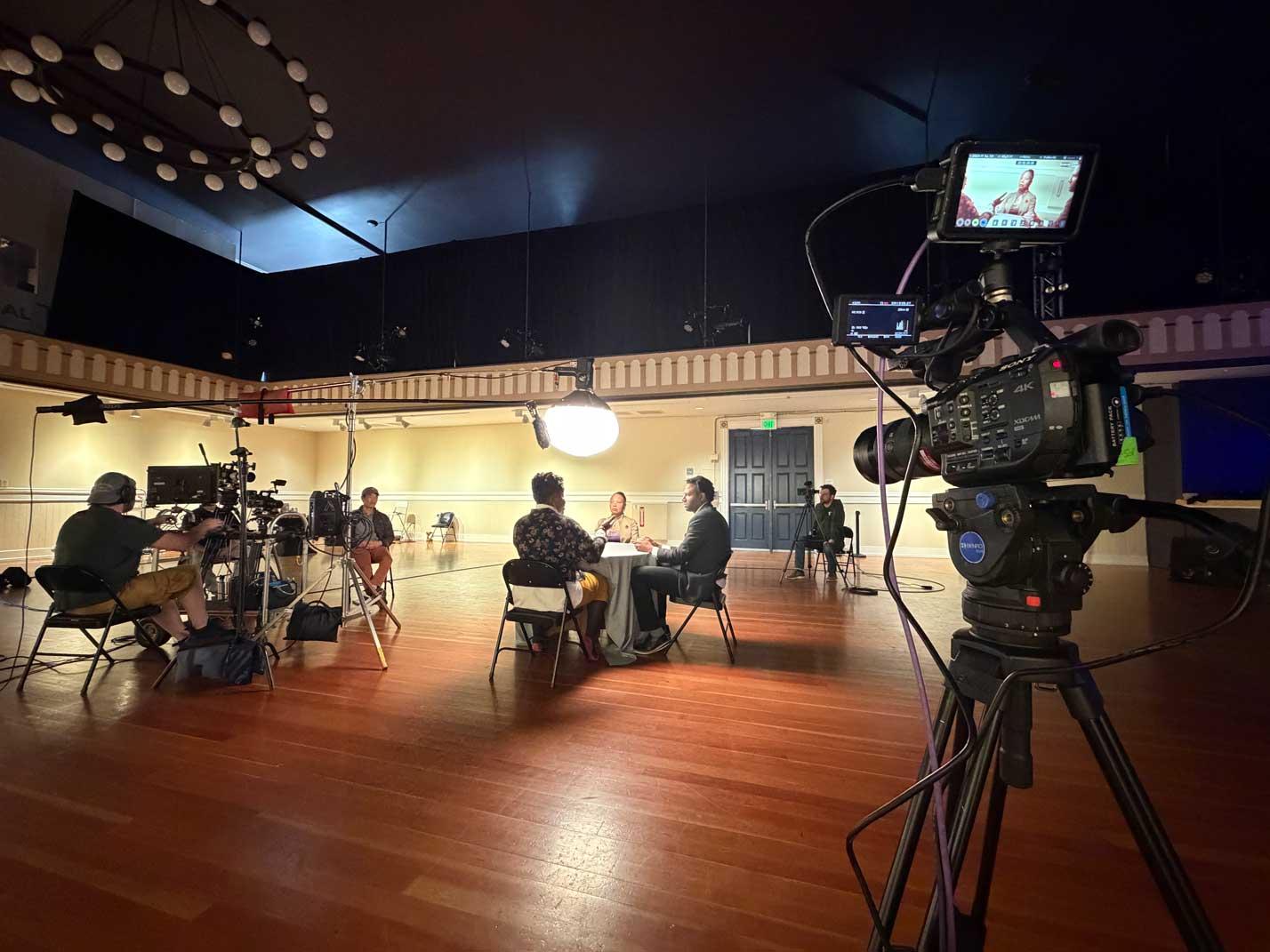 The team at work. Did I mention we’re also creating an all-new TV series?
Ironically, the other challenge I’m facing in writing this newsletter is that it’s April – Earth Month, and Earth Day is right around the corner. While that seems like it would be an easy topic for this environmental newsletter, I need to make a little confession: I’m not the biggest fan of Earth Day. Have you ever heard that critique about Valentine’s Day? The one that goes something like, “Anyone can shower their partner with affection and gifts for one day a year – but that isn’t what makes a relationship last!” As time goes on, I’ve come to think of our relationship with nature in the same way.
As a kid, Earth Day usually meant sitting in a classroom and watching a Bill Nye episode on pollution. Or pledging to turn the tap off when I brush my teeth. Or, if we were really lucky, taking a field trip to pick up litter at the park. While I’m grateful for this foundational level of environmental education that I did receive, as an adult I find myself frustrated that for the most part, we as a culture haven’t seemed to move beyond it.
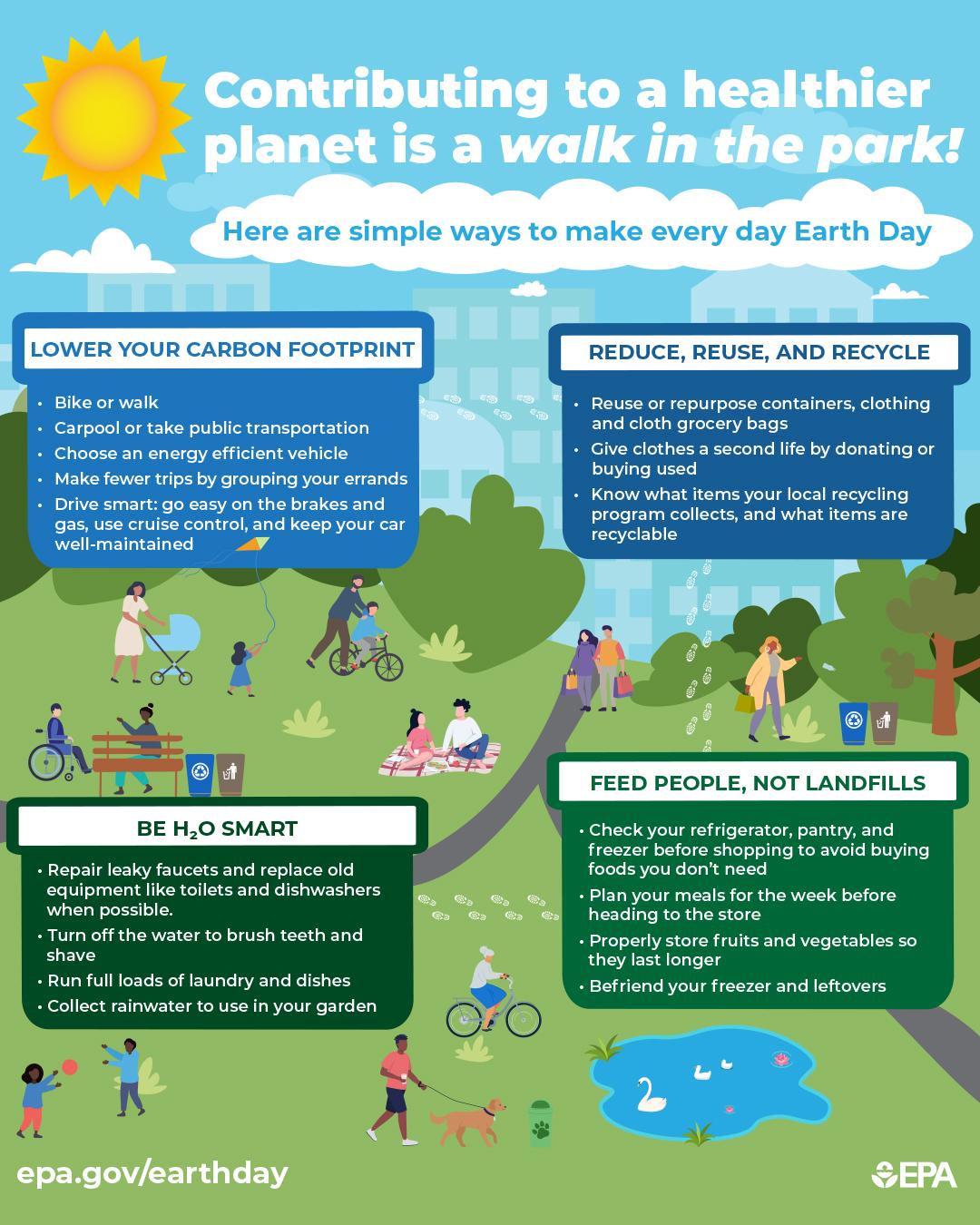 The EPA’s Earth Day infographic.Every April, I see tons of messaging about going green for the month: Instagram posts about reducing CO2 emissions, infographics about how and what to recycle, fliers for beach cleanups. And occasionally, there’s the reminder that “every day should be Earth Day” – true, but not groundbreaking. Maybe all of these are fine places to start, but right now, our burning planet demands much more from us.
So how can we do better? To answer that question, here are three common problems I’ve noticed with how we talk about Earth Day - and some possible solutions to make the conversation more effective for both people and the planet.
Problem #1: Detachment. I see a lot of emphasis put on nature, species, and conservation, but not so much on human communities – which means, unless you already care about the environment, it can be hard to get on board.
Solution: Put people and communities front and center. Earth Day was first started as a mass protest against pollution that was devastating the health and wellness of neighborhoods across the country. While over time, the focus has shifted to global climate change, it’s important to continue sounding the alarm that human health depends on ecosystem health.
Problem #2: Band-aid solutions. By only framing climate solutions in terms of individual eco-friendly choices, we limit the scope of our impact. Truly addressing climate change means tackling its root causes, which are embedded in our social, political, and economic systems.
Solution: Frame individual climate solutions within systemic and cultural change. Yes, it’s important to empower people to think about their own environmental impact – but collective action is where we can make the biggest wins. That means less blaming and shaming, and more coalition building, organizing, and educating.
Problem #3: Centering what we need to give up. So much of the climate conversation has been about reducing consumption, cutting emissions, and leaving behind fossil fuels – which doesn’t always motivate people to act.
Solution: In many ways, solving climate change goes hand in hand with improving the lives of everyday people who, across partisan lines, tend to want the same things: clean air and water, economic security, and a livable future for their children. Make the conversation about what we stand to gain through climate action, and what kind of world we hope to build.
To be clear, I’m not saying we should stop talking about these things altogether. In fact, there has never been a more urgent need for practices like “reduce, reuse, recycle.” But we can’t stop there. Earth Day should serve both as a celebration of our planet – all its beauty and complexity, all it provides, and all the living things we share it with – and as an outlet for our anger and grief at watching it be destroyed. We can use this time to renew and sustain our desire to act, even when April is over. Get comfortable engaging with the issues on a day to day basis. Bring more people into the fold – because the solutions we need will take all of us.
As always, my hope is to create space for an exploration of ideas, knowledge, and meaning-making together – so please reach out! It’s as easy as replying directly to this email, and I would love to hear from you.
All my best,
Hannah
P.S. If you’re looking for ways to get involved in climate action, be in community with others in this space, or just want to learn more, I have some good news. More and more cities across America and around the world are putting on their own Climate Weeks during this time of year, jam-packed with events, talks, activities, and programs. Find one near you!