
Dear Reader,
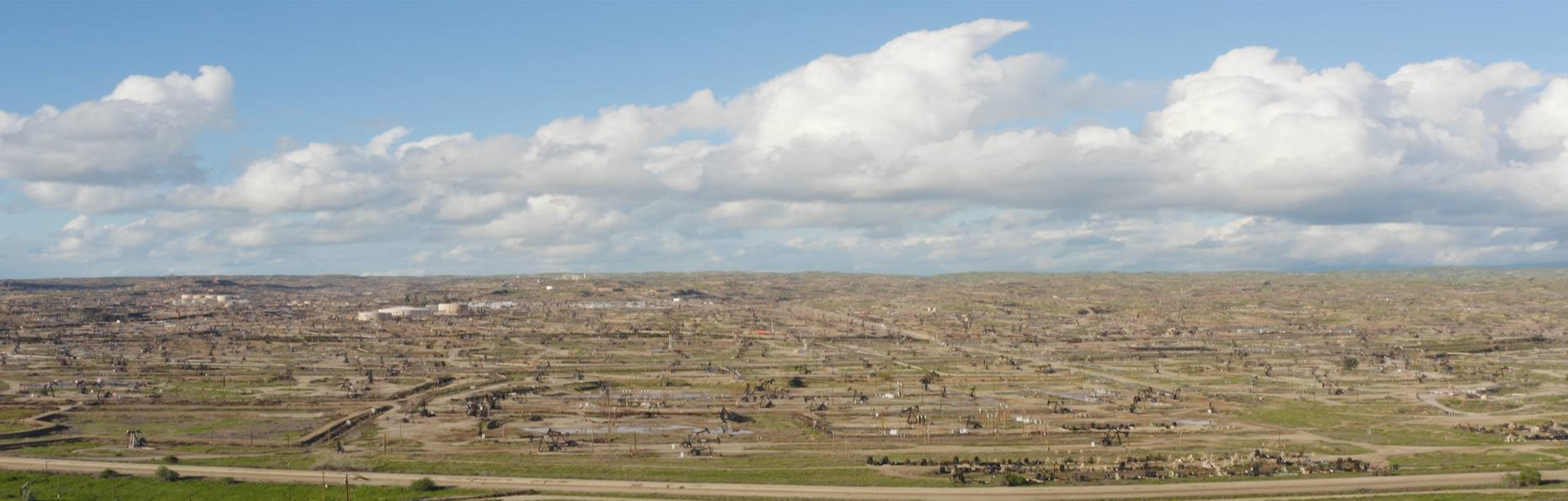
On a 110℉ day in the summer of 2024, I found myself in the middle of the Kern River Oil Field in Bakersfield, California. I was part of a team of producers working on NorCal Public Media’s new documentary series about climate change, and our very first episode had brought us here – to the fifth largest oil field in the entire United States. Every direction I pointed my camera, the footage looked the same: thousands of oil derricks slowly, mechanically pumping out of the rust-colored earth.
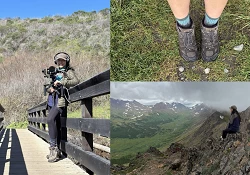
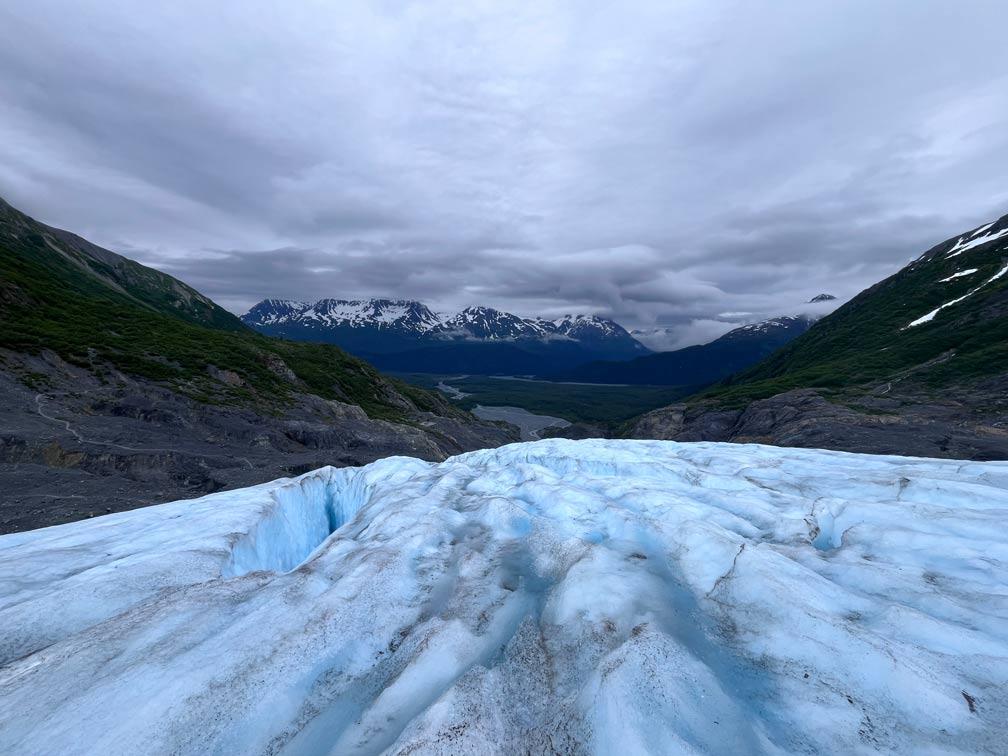 The next summer, I was privileged enough to take an ice climbing trip on Alaska’s Exit Glacier, where I would be repelled deep into glacial crevasses and then climb back up using ice picks – you know, for fun. As we marched clumsily across the frozen expanse, our guide pointed out a distant series of signposts beginning at the bottom of the glacier and stretching over a mile away. She explained that they marked where the ice had ended in previous decades, serving as indicators for the glacier’s recession – which, alarmingly, now averages over 100 ft. per year and is only speeding up.
It suddenly dawned on me that almost exactly one year ago, I was documenting what felt like the epicenter of climate change. Now, here I was seeing one of its clearest impacts with my own eyes.
Despite the urgency of this crisis, climate isn’t always top of mind in our day to day lives. And why should it be? From affordability to mass deportations to the AI revolution, almost everything can feel more urgent than our species’ impact on the environment.
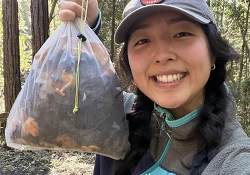
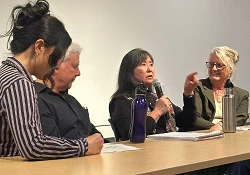
It’s a sticky situation if you happen to have dedicated your career to trying to get people to care about climate change, like I have. My name is Hannah Lee. I’m a storyteller of all things environment and climate, a documentary filmmaker, and a Television Producer here at NorCal Public Media. I was first drawn to the station for their decades-long commitment to local environmental reporting, which more recently has been strengthened under a single umbrella: The Center for Environmental Reporting (CER). Our goal is to transform environmental concern into action by empowering people with information and resources.
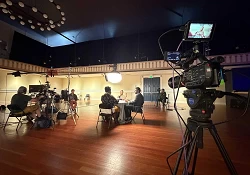
Since I first joined the team in 2022, I’ve had the privilege of building upon the CER’s work through a variety of projects – including the youth-oriented digital series My Planet, My Voice, a disaster preparedness sketch comedy show (and yes, it’s exactly as outlandish as it sounds), and most recently, Climate California. That last one is a 10-episode docuseries which was recently awarded a regional Emmy and started airing nationally with PBS this year.
It’s this project that brought our team to the Kern River Oil Field. We were there to meet Cesar Aguirre, a local activist fighting to protect his community from the devastating health impacts of living next door to oil derricks: air pollution, groundwater contamination, extreme heat. And it’s no accident – nor is it unique to Kern County – that a historically low-income community of color is the one facing these challenges. Around the world, it’s becoming more and more apparent that those who have contributed the least to the causes of climate change are often the ones who are hit first and hardest by its impacts.
Our shoot with Cesar kicked off two busy years of travelling and filming all over California. We talked to a truly incredible array of people – from activists to surfers, and scientists to gamers – all fighting for a better climate future. And what I’ve learned is this: solving climate change will take a lot more than reducing our fossil fuel consumption and greenhouse gas emissions. It means tackling the systemic inequality and injustice at the root of this crisis.
At the outset, this may seem overwhelming. But here’s the silver lining: understanding and addressing climate change as a systemic problem gives us the chance to radically transform what we believe to be possible, and in doing so, create a world that is more livable, equitable, and beautiful for everyone. It also means that the climate doesn’t have to compete for our attention, time, or energy. It’s already part of everything we care about – whether it’s the world’s problems that worry us, or the joys in life that sustain us.
This is what I want to share with you through this new monthly newsletter: stories that give us new ways to think and care about our environment. My hope is to create space for an exploration of ideas, knowledge, and meaning-making together. After all, I’m not a scientist. I’m a storyteller – and the best stories are often written in collaboration with others. So if you have thoughts, comments, questions, or just want to say hi, please reach out to me! It’s as easy as replying directly to this email, and I would love to hear from you.
One last thing. I thought it’d be helpful to cap off each of these newsletters with one piece of climate hope, to combat all the doom and gloom we’re bombarded with. Today, it’s that you’ve taken the time to read this email (which is no doubt one of an infinite number of others in your inbox) about climate change, of all things. Thank you for sharing a slice of your attention and care with me.
I’m excited to be writing this story with you, and I hope you’ll stick around to see where it takes us.
All my best,
Hannah