
 Live Radio
If turkey was served at the first Thanksgiving--which is historically doubtful--it might have been much like one of the organic heritage turkeys now being raised in a few places here in Sonoma County.
{mp3remote}http://media.krcb.org/audio/nbr/11-21-08.mp3{/mp3remote}

There are about a dozen turkey species recognized as "heritage" breeds, most of them still hovering close to extinction. Raising them commercially, even on a small scale, not only keeps these rare varities viable, Paul Dolcini says it also produces a gourmet entrée.
{mp3remote}http://media.krcb.org/audio/nbr/heritage.mp3{/mp3remote}

Isabella Dolcini is helping raise heritage turkeys on the family farm as part of a 4-H project. The movable pens are made of PVC pipe covered with chicken wire. Moving them daily helps protect the birds from predators, who are unable to burrow under the constantly moving barriers.
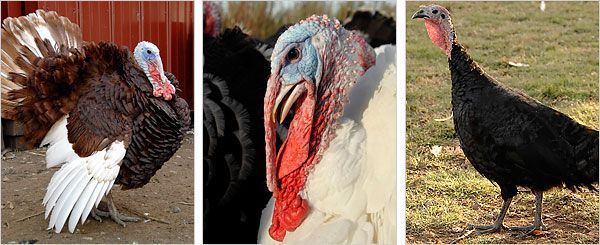
Among the popular varieties of heritage turkeys are, left to right below: Bourbon Red Tom, White Holland Tom, Black Turkey Hen.
Benjamin Franklin was an admirer of the North American wild turkey, and once wrote:
"... For in truth, the turkey is in comparison a much more respectable bird, and withal a true original native of America. Eagles have been found in all countries, but the turkey was peculiar to ours; the first of the species seen in Europe, being brought to France by the Jesuits from Canada, and served up at the wedding table of Charles the Ninth. He is, besides, (though a little vain and silly, it is true, but not the worse emblem for that,) a bird of courage, and would not hesitate to attack a grenadier of the British guards, who should presume to invade his farmyard with a red coat on."
From forgotten varieties of plums and apples to grapefuit and even bananas, an impressive array of rare fruits are growing in Sonoma County.
{mp3remote}http://media.krcb.org/audio/nbr/11-18-08.mp3{/mp3remote}
The California Rare Fruit Growers organization is internationally known for its devotion to cultivating and perpetuating fruit varieites that may otherwise go unnoticed and even face extinction. Even Sonoma County's favorite homegrown apple, the Gravenstein, is considered a rare or heritage variety in most other places.
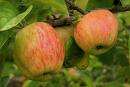
{mp3remote}http://media.krcb.org/audio/nbr/grav.mp3{/mp3remote}
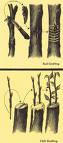 The Redwood Empire Chapter of the California Rare Fruit Growers has events for local members as well as an annual community event to showcase the organization and demonstrate their grafting and planting techniques. Visitors can even select some cuttings to take home.
Phil Pieri, president of the Redwood Empire chapter, retired to Sonoma County to fulfill his lifelong dream of growing food for his own table.
{mp3remote}http://media.krcb.org/audio/nbr/dream.mp3{/mp3remote}
No matter where you go, insects have people hugely outnumbered. But there are far more beneficial bugs than harmful ones.
{mp3remote}http://media.krcb.org/audio/nbr/10-24-08.mp3{/mp3remote}
 This is a close-up look at a snowy tree cricket. You can see if you recognize its call here.
Planting a mixed landscape provides a diverse habitat for the insects that prey on garden pests.
{mp3remote}http://media.krcb.org/audio/nbr/diverse.mp3{/mp3remote}
Encouraging beneficial insects is a year-round endeavor, and a key component is planting sources of nectar that will be in bloom as the desirable bugs are emerging.
{mp3remote}http://media.krcb.org/audio/nbr/Seasons.mp3{/mp3remote}

For more information about the workshop on"Garden Allies: Beneficial Insects and Other Helpful Garden Denizens" on October 25th at SSU, click here.
Alternatives to technologies that depend on fossil fuels are all around us, modeled in the natural world, and studied in the new field of bio-mimicry.
{mp3remote}http://media.krcb.org/audio/nbr/10-15-08.mp3{/mp3remote}

Janine Benyus, author of Biomimicry: Innovation Inspired by Nature, is founder of The Biomimicry Institute, whose mission is to nurture and grow a global community of people, who are learning from, emulating, and conserving life's genius to create a healthier, more sustainable planet.
As one delves deeper into biomimicry, Benyus says there are three levels of analysis:
{mp3remote}http://media.krcb.org/audio/nbr/levels.mp3{/mp3remote}
There are instances of complex natural processes that could be adapted for human use all over the planet, Benyus says. African ant mounds are just one interesting example of what is being called "enabling technology."
{mp3remote}http://media.krcb.org/audio/nbr/mounds.mp3{/mp3remote}

SMIT GROW is an example of biomimicry. By creating solar panels in the shape of leaves, to gather energy from the sun and wind. Find out more here.
When you look at the global ecosystem, Benyus explains, humans as a species are akin to weeds, gobbling up resources with scant thought for their long-term presence where they have taken root.
{mp3remote}http://media.krcb.org/audio/nbr/weeds.mp3{/mp3remote}
Janine Benysus will be a keynote speaker at the annual Bioneers Conference, October 16th-20th, at the Marin Center in San Rafael. For more information, click here. There is a full roster of presenters here , and a detailed conference schedule here.
Northern California
Public Media
Newsletter
Get the latest updates on programs and events.
